
Selecting an insulation system is an engineering decision that affects building life, occupant comfort, and operating and maintenance costs. No single material suits every condition; the correct system depends on the element being protected, climate, structural movement, and how the space is used.
Waterproofing versus thermal insulation
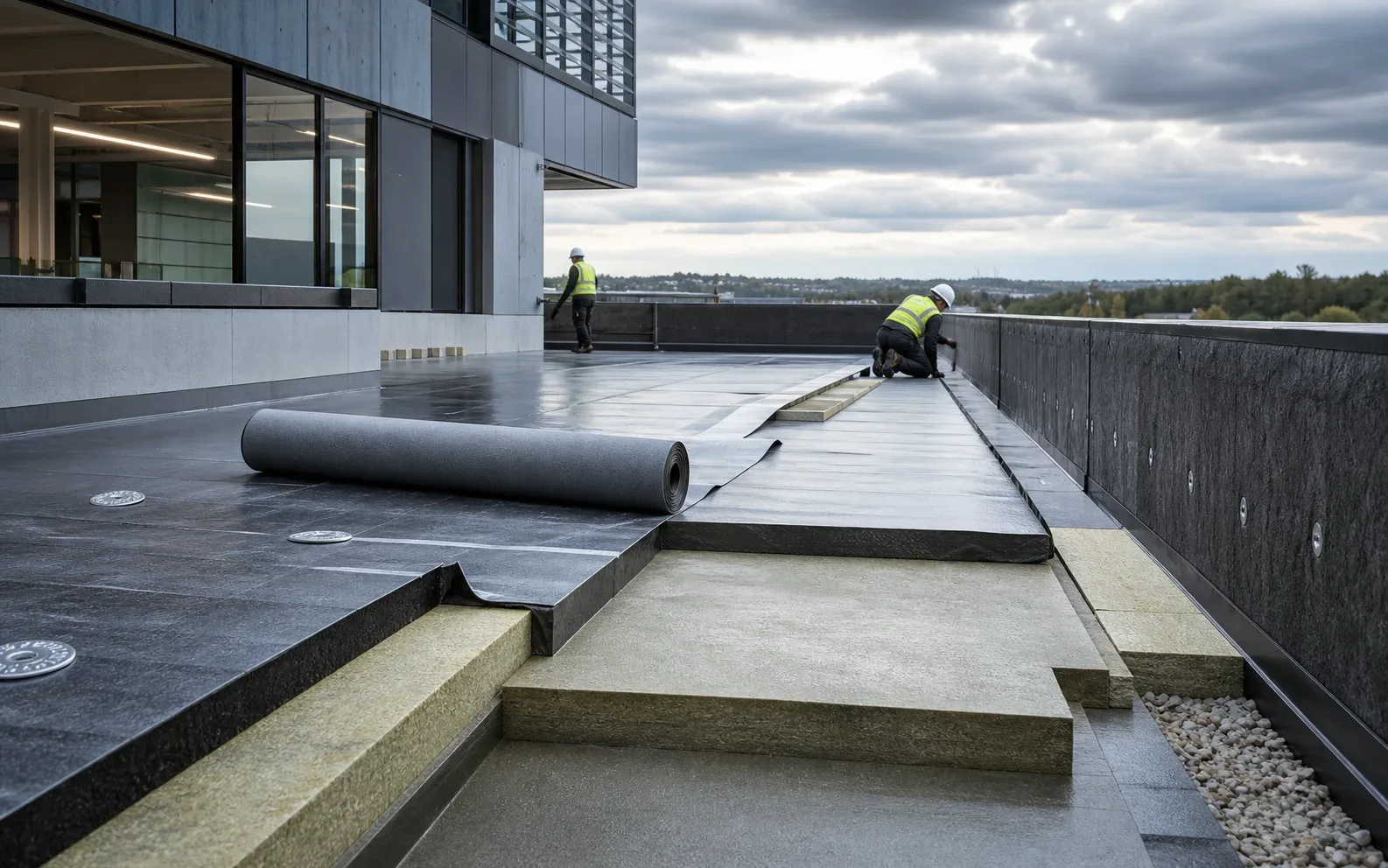
Waterproofing prevents water and moisture from entering building elements and is commonly used on roofs, tanks, bathrooms, and basements. Thermal insulation limits heat transfer through roofs and façades, helping stabilize indoor temperatures and reduce HVAC loads.
Assess the site before selecting materials
The decision begins with inspecting the substrate, slopes, cracks, joints, and water sources. It is also important to understand whether the element is exposed to direct sunlight, standing water, structural movement, or chemicals.
- Exposed roofs need UV and heat resistance with careful drainage details.
- Water tanks require suitable materials and testing before operation.
- Bathrooms and kitchens need continuous protection at corners and penetrations.
- Basements require early treatment of water pressure and construction joints.
Application matters as much as the product
Even a high-quality material can fail if the surface is poorly prepared or corners, openings, and joints are not treated correctly. Application thickness, curing time, and layer overlaps must follow the approved system requirements.
The most common leakage points are not at the center of a surface, but around drains, penetrations, joints, and waterproofing terminations.
Never skip testing
Quality control includes inspecting the substrate, documenting layers, carrying out flood or system-appropriate testing, and protecting the membrane before subsequent works. This allows issues to be corrected before they become costly defects.
Consider the building’s full life cycle
Initial price is only one part of the decision. A suitable system reduces maintenance, protects concrete and finishes, and improves energy performance. Compare service life, repairability, and warranty—not material price alone.
OMRIVA and Lamsat Asal select insulation systems according to actual project conditions, then control installation details and testing to provide integrated, long-term protection.